
Beyond the Script: Costume Design in 'Sterling Point'
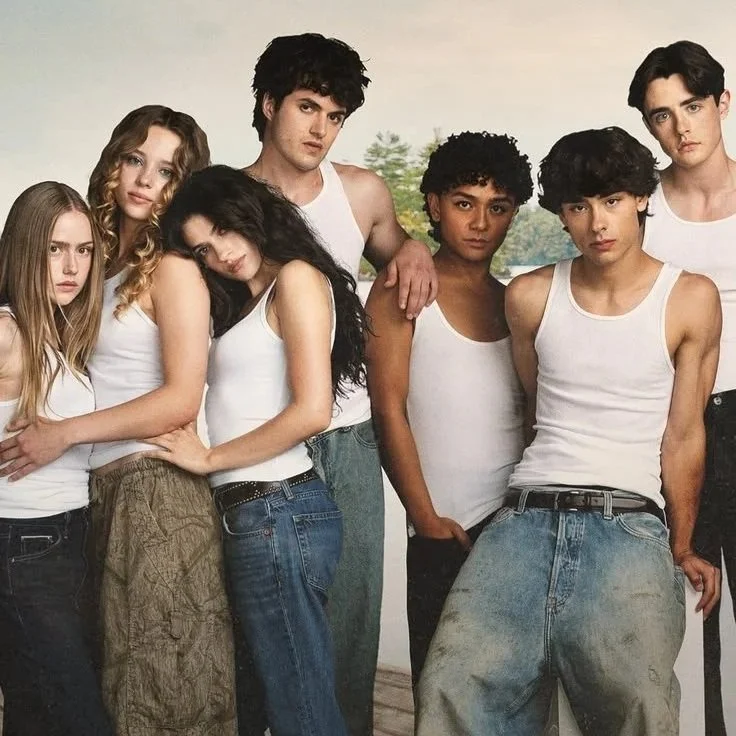
I just finished watching Sterling Point, a new coming-of-age television series on Amazon Prime. The series follows 17-year-old Annie Jacobson and her twin brother, Connor Jacobson as their worlds are turned upside down when they discover their estranged grandfather has passed away and left them ownership of Sterling Point, an island off the coast of Canada. Annie as she takes off to Canada in order to uncover years of family secrets along with newfound friendships, romances, grief, and freedom.
While watching the series I found myself wondering how costume design works for something like this where much of the plot is casual. How can the designer portray character identity through such toned-down clothing? I read a Forbes article, “The Thousand Ways Costumes In ‘Sterling Point’ Make A Great Show Better”, to better understand the process of a costume designer from concept to execution. The writer, Rachel Elspeth Gross, interviews Marissa Schwartz, the costume designer for Sterling Point, and asks her many questions I was curious about myself. The answers seemed to revolve around a single overarching theme, authenticity.
Like I mentioned earlier, much of this show takes place in casual settings with characters dressed in loungewear. In order to keep the loungewear feeling authentic to each character, Schwartz attempted to connect the script to her personal life, “I grew up going to summer camp…in Muskoka and growing up going to camp, there was a subliminal about style, about access, about wealth… So here, it had to feel really authentic to each person, and what that looked like for each person was a little bit different.” Each character in the show comes from vastly different backgrounds. To develop the plot through costume, Schwartz had to immerse herself in it and dissect what sets each character apart.
Schwartz details how she would watch dailies, the raw video footage, to analyze each actor and the character they portray. “When I would… see how Bo was delivering lines, there was such an amazing, charming, dry humor that really inspired me. So, we would put her in pieces which reflected that.” Bo plays Oona, a young girl who practically grew up with no parental figures, raising both herself and her younger sister simultaneously. She flies by the seat of her own pants and lives by her own rules. Dressing a character as unique as hers needed to feel true to that. Schwartz chose to dress Oona in graphic tees reading ‘PMS, putting up with men’s shit’, and ‘if it ain’t got tits or tires you know it’s bound to cause problems’. They teetered the line between blunt and offensive, but Schwartz knew her character had the ability to pull it off.
Since this is a coming-of-age show, Annie went through many ups and downs. One day was particularly emotional; Annie goes back to the cottage to take a nap. She undresses and throws on her late mother’s t-shirt for comfort. It is worn-in, with a beautiful beach landscape illustrated across it in a very subtle way. Schwartz needed this piece of clothing to seem soft, cozy, almost vintage, in order to mimic something that belonged to Annie’s mother. She sourced real vintage apparel in order to achieve this. Schwartz notes how gathering vintage apparel for television shows is difficult, not to mention expensive, because of copyright. Though, she recounts how important it was to her to still use it, “new stuff is lovely but can be very impactful on our environment and there is a fun way to show your personality and taste and style through what exists out in the world already.”
Hearing Schwartz point-of-view was truly eye-opening for me into the world of costume design. Fashion has always been a way for people to express themselves, and that is no different when it comes to film characters. Dressing them in clothing that can authentically convey their personality is very valuable in developing a plotline alongside a script. Schwartz explained this notion beautifully in her interview.